
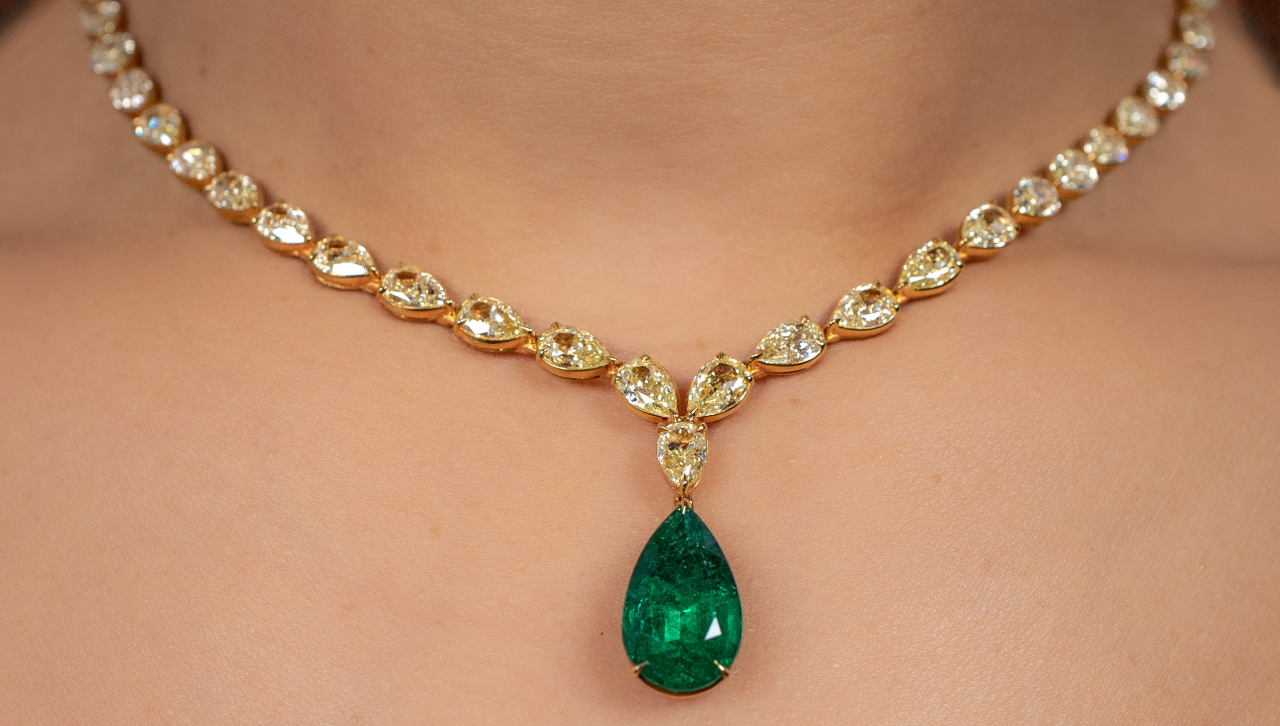

The luxury jewelry market is entering a technical renaissance. Collectors and conscious consumers no longer buy solely for sparkle — they buy for story, provenance, and verifiable ethics. Today’s sophisticated buyers expect proof that a gem’s origin, journey, and treatment are authentic. This guest post explores advanced provenance techniques — from chemical fingerprinting and laser micro-inscriptions to blockchain-enabled supply chains — and explains how designers, retailers, and investors can integrate them to increase value, reduce risk, and command premium pricing.
Why provenance matters now (and why “pretty” isn’t enough)
Provenance used to be a marketing line on a certificate. Now it’s a multi-layered guarantee that affects:
-
Trust — consumers demand assurance a gem wasn’t sourced from conflict zones or via exploitative labor.
-
Value — verified origin and treatment can materially increase resale prices and auction interest.
-
Regulatory compliance — global regulations and import requirements are tightening; documentation prevents customs delays and legal exposure.
-
Brand differentiation — transparency becomes a unique selling proposition for premium houses.
Put simply: provenance converts emotional purchase into verifiable asset.
Modern provenance tools explained
Chemical fingerprinting and isotopic analysis (what the lab sees)
Chemical fingerprinting uses advanced spectroscopy and isotopic analysis to create a data-rich signature of a gemstone or metal. Key points:
-
How it works: Labs analyze trace element concentrations and isotopic ratios (e.g., carbon, oxygen, lead) in stones and metals. These micro-signatures correlate with geographic formation conditions.
-
Why it matters: Natural sapphires from Kashmir, spinels from Luc Yen, or Colombian emeralds each reveal distinct fingerprints. This scientific profile can corroborate or contradict claimed origin.
-
Limitations: Requires expert interpretation and access to regional reference databases; not all gem types have comprehensive libraries yet.
Laser micro-inscription and microscopic tagging
Micro-inscriptions are tiny, durable engravings on girdles or facets.
-
Benefits: Non-destructive, permanent, and scannable with magnification, they link a physical gem to a digital record (certificate number, blockchain hash, owner ID).
-
Use cases: High-value stones, custom commissions, and heirloom redesigns where chain-of-custody matters.
-
Challenges: Legibility over centuries and potential impact on certain stones’ structure must be considered.
Embedded nano-tracers and advanced marking
Emerging options include embedding microscopic tracers (e.g., nanodots or micro-inclusions engineered to be unique).
-
Pros: Hard to counterfeit and intangible to the naked eye, offering near-forensic identity.
-
Cons: Requires specialist labs and may raise questions about permanence and gem integrity.
Blockchain and decentralized provenance ledgers
Blockchain doesn’t make gems more beautiful — it makes provenance immutable.
-
Mechanism: Each step — mining, cutting, certification, sale — creates a time-stamped ledger entry. Certificates, micro-inscriptions, and lab reports reference a blockchain hash.
-
Advantages: Tamper-resistant record, easier third-party audits, and better consumer access (via QR codes or apps).
-
Practical outcome: A buyer scans a pendant’s QR code and sees the full lifecycle: mine GPS (or mine region), cutter, assay lab, certifications, prior owners.
How provenance enhances commercial value
For designers and brands
-
Premium positioning: Storytelling backed by verifiable data allows brands to justify price premiums and limited-edition status.
-
Reduced liability: Documented supply chains minimize risk of unknowingly selling conflict-sourced materials.
-
Marketing efficiency: Transparent stories reduce friction during purchase decisions and shorten sales cycles.
For retailers and resellers
-
Higher resale premiums: Verified origin & immutable history command stronger prices in secondary markets and auctions.
-
Easier authentication: Returns and disputes decline when independent verification is available.
-
Inventory control: Blockchain records give real-time visibility across multi-store or consignment networks.
For investors and collectors
-
Asset security: Verifiable provenance increases liquidity and borrower confidence for collateralized lending.
-
Provenance-driven appreciation: Pieces with exceptional, documented histories (historic owners, unique origins) often outperform similar, undocumented items.
Implementation roadmap for jewelry houses (practical steps)
1. Prioritize which SKUs to upgrade
-
Start with high-value, limited runs, and bespoke pieces.
-
Reserve full provenance for pieces >X value (define per business model).
2. Build trusted lab partnerships
-
Choose labs with capabilities in isotopic testing, spectroscopy, and micro-inscription certification.
-
Maintain an indexed reference database for common sources (region, mine).
3. Integrate physical and digital ties
-
Laser-inscribe certificate hash on stone metalwork.
-
Generate a tamper-proof digital record (blockchain hash, PDF certification, treatment disclosures).
-
Provide access via QR/NFC on hang tags and warranty cards.
4. Educate sales teams and consumers
-
Train staff to explain technical provenance in simple terms.
-
Use visual aids showing the lifecycle — this builds buyer confidence.
5. Plan for long-term data stewardship
-
Use decentralized storage plus encrypted backups.
-
Ensure succession plans for data and keys if the brand changes hands.
Ethical considerations and pitfalls
-
Over-promising: Don’t market “proof” where scientific certainty is weak. Be transparent about limits of each method.
-
Privacy: Owner IDs and purchase histories require consent and secure handling.
-
Greenwashing risk: Avoid using traceability claims to obscure other environmental impacts (e.g., energy used in treatments).
-
Accessibility: Small artisans may lack resources for expensive testing; consider shared lab cooperatives or tiered provenance offerings.
Case scenarios (practical examples)
Scenario A — Bespoke engagement ring
A high-net-worth client requests a Colombian emerald with verified conflict-free origin. The jeweler:
-
Orders isotopic analysis and laser micro-inscription.
-
Uploads lab report and treatment history to a blockchain record.
-
Issues a lifetime warranty linked to the blockchain record. Result: client pays a 15–30% premium and feels secure about legacy value.
Scenario B — Estate re-sale
An auction house verifies an old sapphire using spectral fingerprinting and finds a match to a known Ceylon mining region. The newly verified provenance uplifts bid estimates by 20% and attracts institutional buyers.
ROI: quantifying the upside
While upfront costs (lab tests, laser equipment, blockchain setup) can be significant, the returns often justify investment:
-
Higher margins on traceable items
-
Fewer disputes and associated costs
-
Enhanced resale value and marketability
-
Brand loyalty and repeat purchases from ethically motivated consumers
A phased approach (pilot, evaluate, expand) enables cost control while proving demand.
Final checklist before you launch a provenance program
-
Define objectives: ethics, value, compliance, or storytelling?
-
Select technologies that align with objectives (isotope labs vs. blockchain).
-
Establish partner SLAs with labs and certification bodies.
-
Create consumer-facing materials (certificates, scanable tags).
-
Set analytics to measure price lift, resale value, and customer conversion changes.
Frequently Asked Questions (FAQ)
1. How does chemical fingerprinting differ from traditional certificates?
Chemical fingerprinting provides an independent scientific profile tied to regional formation conditions, whereas traditional certificates often focus on cut, clarity, color, and may rely on seller-declared origin.
2. Can blockchain replace lab reports?
No — blockchain is a ledger that records and preserves data; it does not generate the scientific verification. Best practice pairs lab results with blockchain recording for immutability.
3. Are micro-inscriptions visible to buyers?
Micro-inscriptions require magnification (loupe or microscope) to read. They function as secure physical anchors that link the stone to its digital record.
4. Do these provenance methods work for lab-grown gems?
Yes. Traceability for lab-grown gems focuses on facility certification, batch records, and digital identifiers. Distinguishing lab-grown from natural still requires gemological testing.
5. Will provenance technology devalue undocumented vintage pieces?
Not necessarily. Vintage pieces with compelling, well-documented histories may appreciate. Undocumented items can still be valuable but face additional authentication hurdles.
6. How do small designers afford these services?
Options include cooperative labs, selective use (only for flagship pieces), or using less costly markers like certificate numbers and trusted assay partners while scaling up.
7. Could provenance data be used in insurance or lending?
Absolutely. Verified provenance reduces risk and improves liquidity, making pieces more attractive as collateral and simplifying insurance underwriting.