
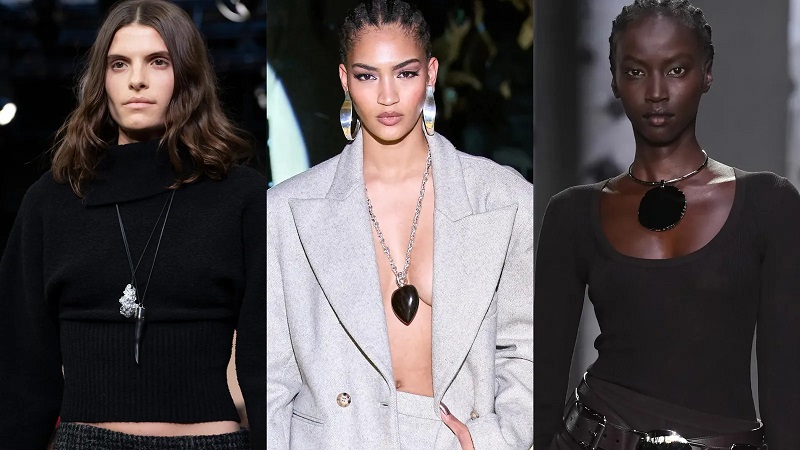

Jewelry is rarely just an afterthought pinned to an ensemble; it serves as the cultural accent of the city that forged it. While runway garments often command the opening headlines of seasonal fashion weeks, the jewelry walking those presentations reveals the deeper philosophical mood of each capital. From the historic ateliers of Paris to the kinetic street style of Tokyo, every fashion metropolis approaches jewelry with a distinct visual language.
Understanding how these global hubs interpret adornment offers more than a catalog of transient trends. It provides a toolkit for personal expression, showing how geography, architecture, and municipal temperament shape the metals, stones, and silhouettes we choose to wear. By studying the jewelry defining today’s leading fashion capitals, you can curate a collection that feels worldly, intentional, and thoroughly contemporary.
Paris: The Poetry of Heirloom Luxury and Colored Gems
The Parisian relationship with jewelry is rooted in ease and generational continuity. The French capital rarely embraces ostentatious, hyper-polished sets that look straight out of a showroom vault. Instead, the prevailing aesthetic suggests pieces that have been inherited, collected across decades, and worn with casual disregard for formal dress codes.
Recent collections emerging from Paris lean heavily into organic, fluid forms and colored gemstones. Deep emeralds, velvety sapphires, and warm tourmalines take center stage, set in soft, brushed gold with low-profile bezels rather than high-prong commercial mounts. These colorful stones are frequently paired with baroque pearls—gems celebrated precisely for their irregular, lumpy asymmetry rather than spherical perfection.
The key to Parisian styling is context. A pair of vibrant drop earrings featuring unheated gems is not saved for black-tie galas; it is worn on a Tuesday morning with an unbuttoned poplin shirt, relaxed trousers, and an understated wool coat. The intention is never to look overly styled, but to let the jewelry appear as a natural extension of personal character.
Milan: Sculptural Grandeur and Heavy Molten Gold
Where Paris whispers, Milan projects confidence through scale, craft, and an unapologetic celebration of metalwork. The Italian fashion capital views jewelry as wearable sculpture, heavily influenced by the nation’s architectural legacy and deep-rooted goldsmithing traditions.
In Milan, the dominant trend remains oversized, sculptural gold. Designers and artisans favor warm yellow gold worked into molten textures, wide tubular collar necklaces, and substantial cuff bracelets that fit like armor around the wrist. Rather than relying on intricate filigree or delicate pavé detailing, Milanese jewelry commands attention through broad, reflective surfaces and confident silhouettes:
- Tubular and torque chokers: Rigid, high-shine metal neckbands that rest cleanly against the collarbone, offering an architectural break above tailored lapels.
- Molten and hammered cuffs: Broad bracelets that celebrate the imperfect marks of the metalsmith’s hammer, catching light dynamically with every movement.
- Substantial dome rings: Heavy, rounded signet and dome rings worn solo or paired in deliberate twos, balancing masculine volume with fluid curves.
To style Milanese jewelry effectively, treat the piece as the visual anchor of your outfit. A solitary, heavy gold cuff worn over the cuff of a fine-gauge black turtleneck or paired with a sharp double-breasted blazer creates an immediate visual statement that requires no secondary accessories.
New York: Industrial Precision and Modular Stacking
New York style has always been governed by the rhythm of transit and transition. Ensembles in the American capital must effortlessly navigate morning boardroom meetings, afternoon creative consultations, and late-night downtown dinners without a wardrobe change. Consequently, New York jewelry trends emphasize modularity, industrial geometry, and high-contrast functionality.
The signature New York approach centers on mixed-metal layering and utilitarian hardware. Clean platinum and sterling silver sit comfortably alongside fourteen-karat yellow gold, dismantling the outdated convention that metals must remain monochromatic. Hardware-inspired elements—such as carabiner clasps, curb chains, and elongated paperclip links—provide an urban, architectural edge to classic tennis necklaces and solitaire studs.
New Yorkers master the art of the curated stack. Instead of a single dramatic piece, they favor a deliberate rhythm of varying scales: a delicate diamond bezel chain worn alongside a thick industrial link, or an “earscape” of graduated huggie hoops punctuated by a sharp ear cuff. The result is intentional, agile, and distinctly metropolitan.
London: Defiant Asymmetry and Subcultural Contrasts
London has long served as fashion’s creative provocateur, effortlessly bridging Savile Row tailoring with the rebellious energy of punk and counterculture. Jewelry inspired by the British capital reflects this enduring dialogue between aristocratic heritage and artistic disruption.
The most notable trend defining London runways is deliberate asymmetry and mismatched styling. Rather than wearing identical pairs, stylists deliberately contrast lengths, weights, and motifs across both ears:
Single Dramatic Drops
Wearing one shoulder-skimming drop earring—crafted with raw, uncut crystals or suspended chains—while leaving the opposite ear completely bare or dressed in a micro-stud creates dynamic visual tension.
Subverted Classicism
London designers frequently borrow traditional symbols like signet crests, safety pins, and Victorian mourning motifs, reimagining them through oxidized silver, blackened rhodium, and raw-cut stones.
This off-kilter approach injects immediate personality into structured clothing. A sharply tailored trench coat or an understated slip dress takes on an artistic, subversive edge when punctuated by jewelry that refuses to follow symmetrical rules.
Tokyo: Spatial Restraint and Architectural Wirework
In Tokyo, where fashion constantly oscillates between hyper-detailed street subcultures and hyper-minimalist craftsmanship, jewelry is defined by spatial awareness and structural discipline. Tokyo designers frequently operate with an understanding of ma—the traditional concept of negative space—allowing the air around a piece of jewelry to become part of its design.
The defining trend from Tokyo is ultra-fine architectural wirework and floating pearls. Rather than stringing Akoya pearls into traditional strands, Japanese designers float individual, high-luster pearls on delicate, tension-set titanium or silver wires that trace the outer curve of the ear or suspend weightlessly along the collarbone.
Geometric ear climbers that trace the natural cartilage, open-ended floating rings that bridge two fingers, and matte-finished blackened metals dominate the scene. These pieces are subtle from a distance but reward close observation, making them the ultimate expression of quiet, intelligent design.
Bringing Global Trends Into a Daily Rotation
Integrating jewelry inspired by global fashion capitals into your everyday wardrobe does not require adopting a foreign identity wholesale. Instead, use these cities as stylistic compass points:
- When an outfit feels too simple, introduce a Milanese sculptural cuff to establish structure.
- When tailored suiting feels too corporate, disrupt it with London-style asymmetrical earrings.
- When off-duty denim requires effortless polish, turn to a Parisian mix of baroque pearls and vintage-inspired stones.
- When running between varied engagements, rely on New York’s disciplined mixed-metal chains.
The true power of jewelry lies in its permanence and portability. Long after seasonal silhouettes fade from the runways, well-chosen metals, stones, and architectural shapes remain enduring markers of personal style. By borrowing from the world’s great fashion centers, you construct a jewelry collection that transcends micro-trends, telling a rich, multifaceted story every time you get dressed.